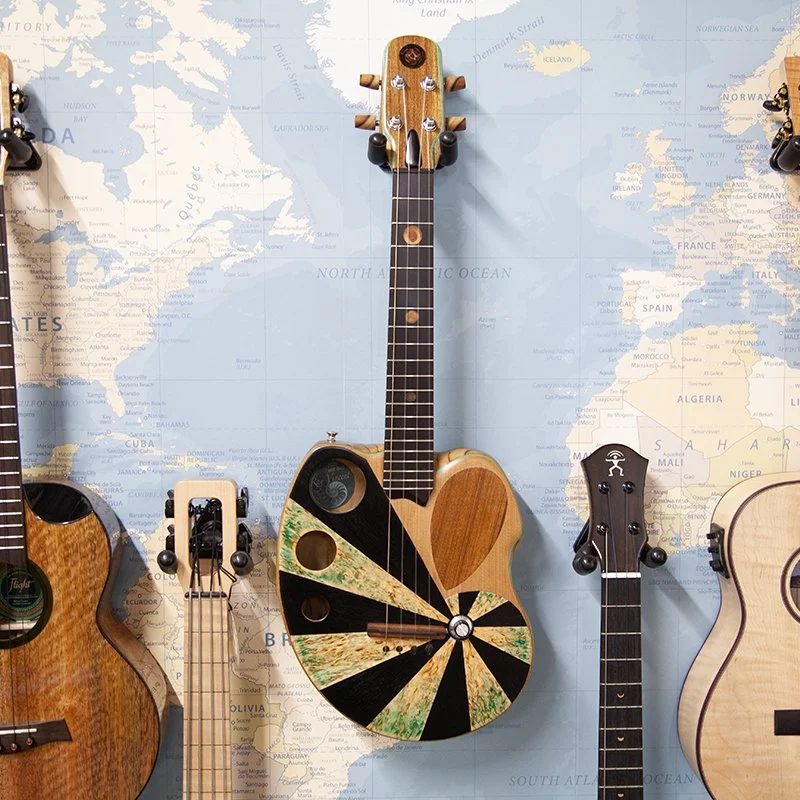
Ray Vincent All Solid Western Red Cedar and Teak Chambered Electro Tenor Ukulele
This ukulele was handcrafted in Ontario by Ray Vincent, a builder renowned for his innovative and unconventional approach to ukulele design. It’s a striking instrument that almost seems impossible at first glance, more like a piece of sculpture than a musical instrument. You can’t help but wonder what kind of creative vision leads someone to design and build something like this—it’s an absolutely stunning creation.
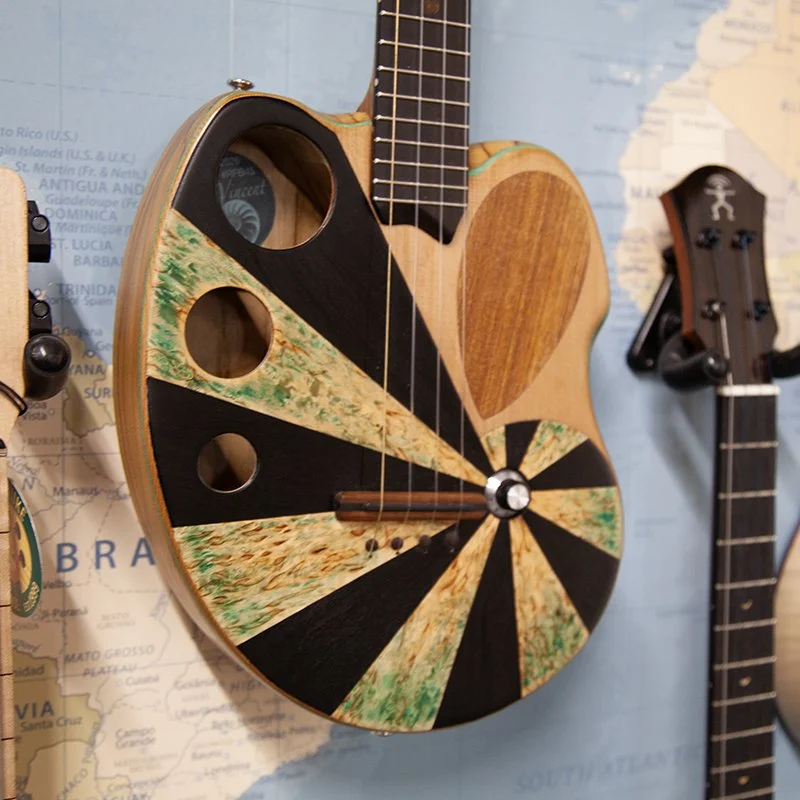
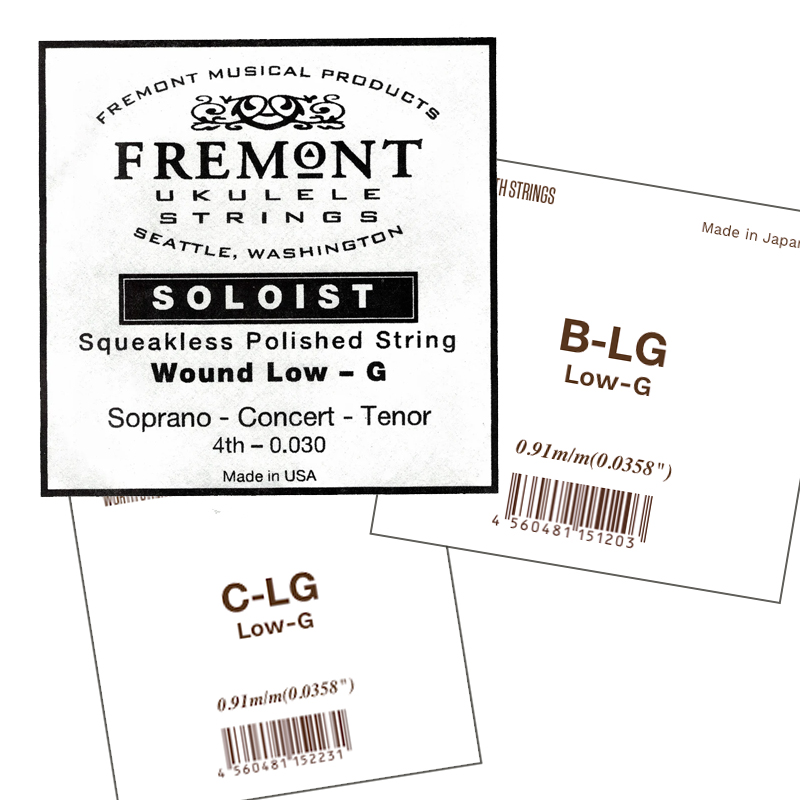
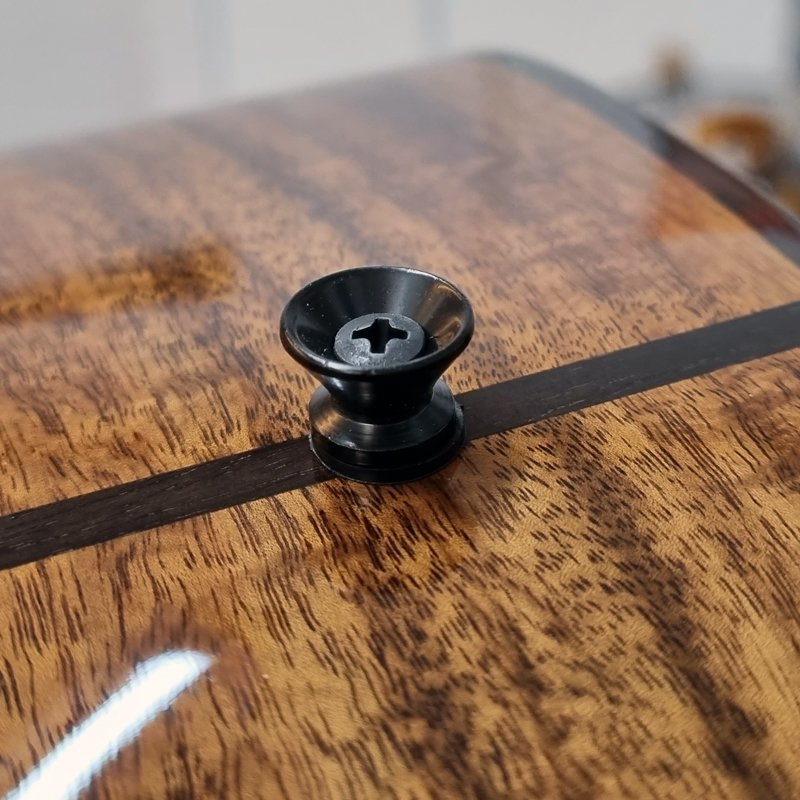
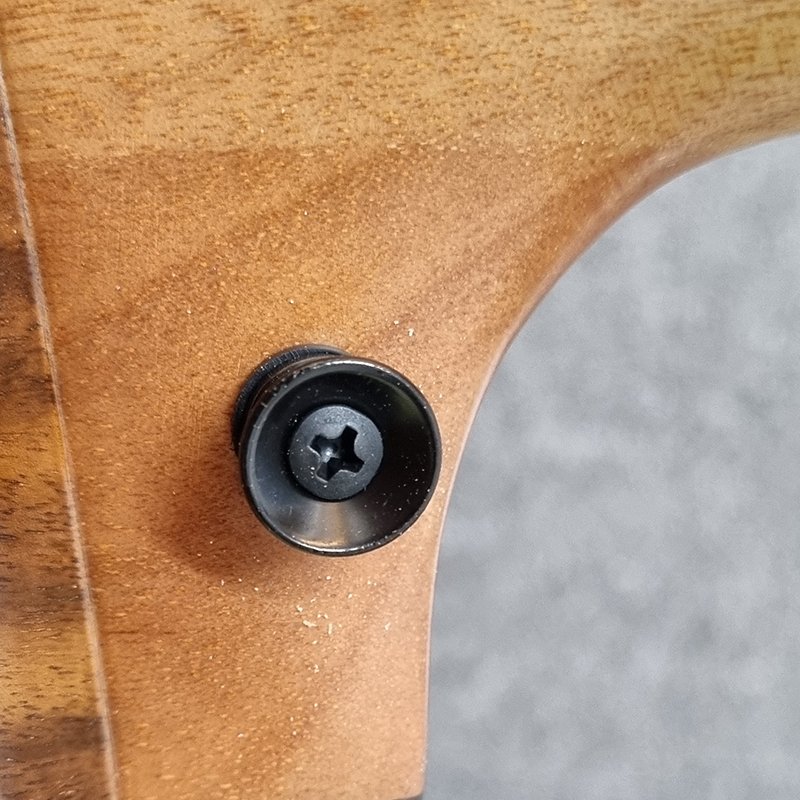
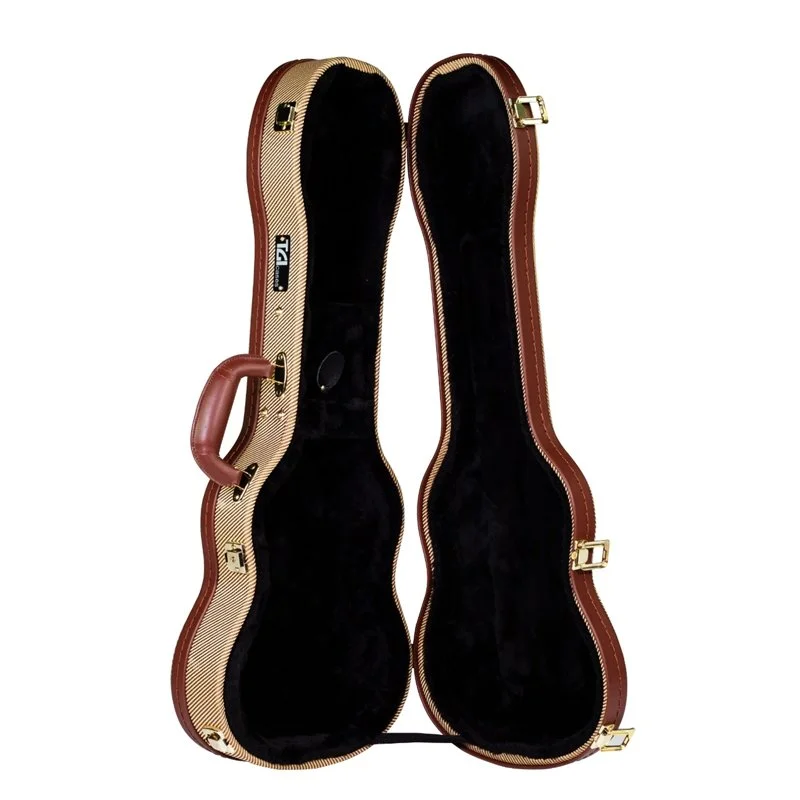
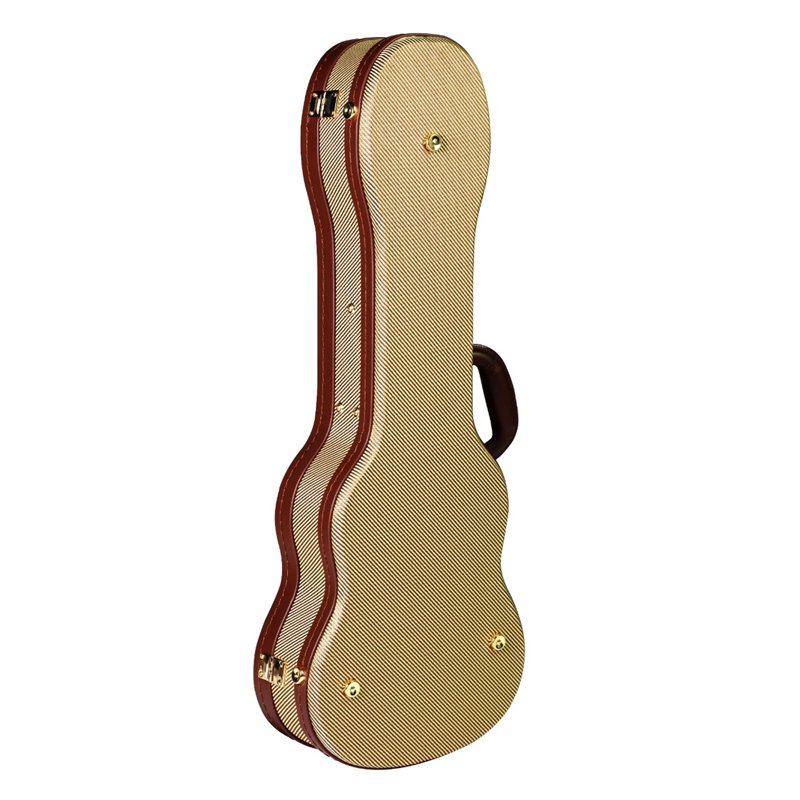
Before looking more closely at the materials and construction, here are the key specifications. This is a chambered-body electro-acoustic tenor ukulele, strung with Pepe Romero strings and a La Bella smooth-wound low G, and tuned GCEA. It features an Artec passive pickup with a volume control, a 38mm nut width, and is supplied in a black pod-style case. The pickup jack doubles as a strap button, while a second strap button is fitted to the body for added convenience. (When I say ‘convenience’, I mean, ‘my convenience’, as my hands would be shaking drilling a hole in this, that’s for sure!)
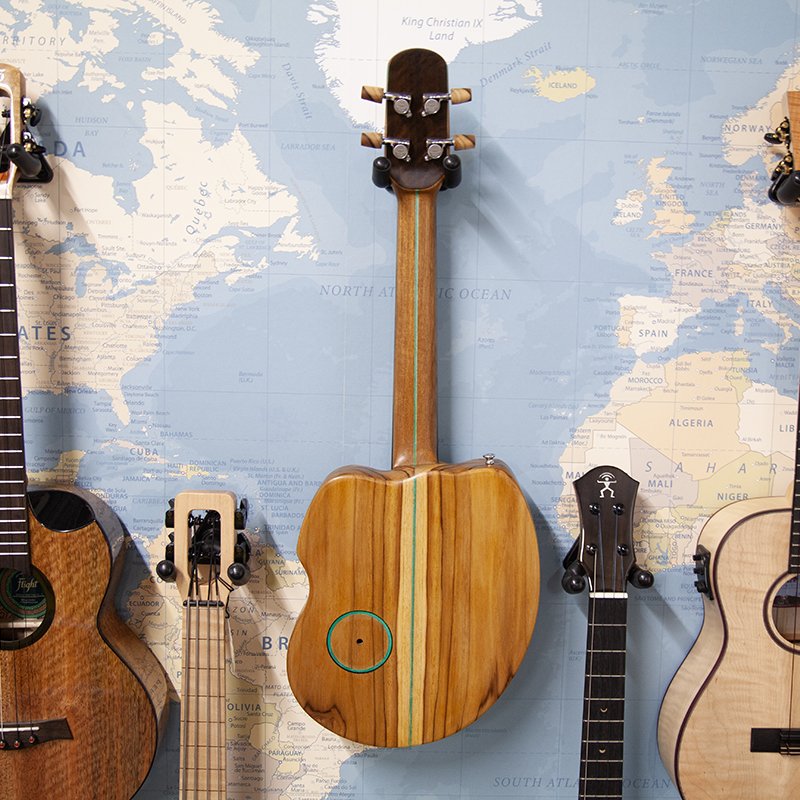
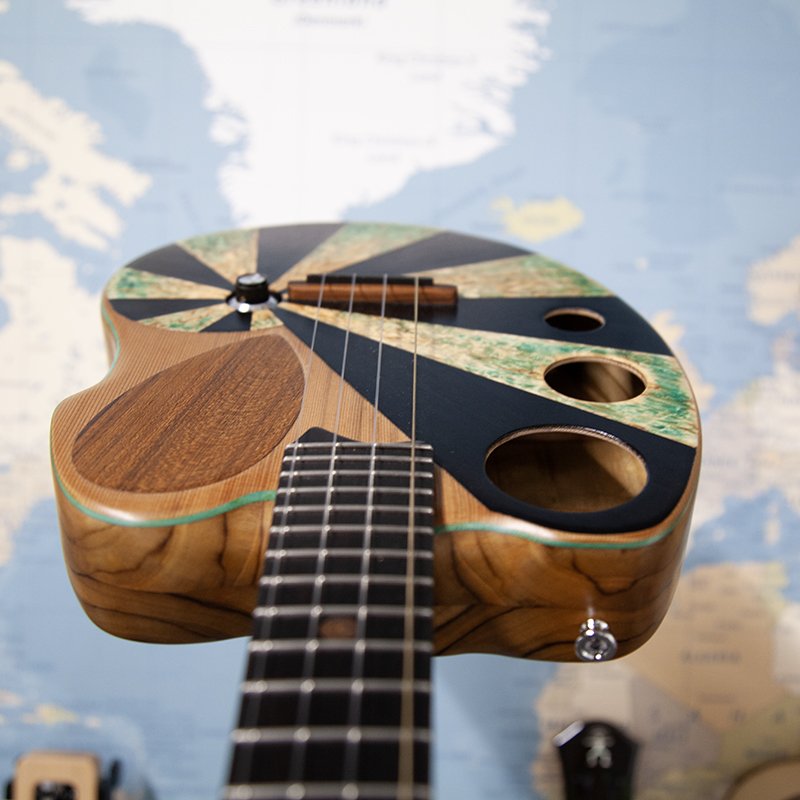
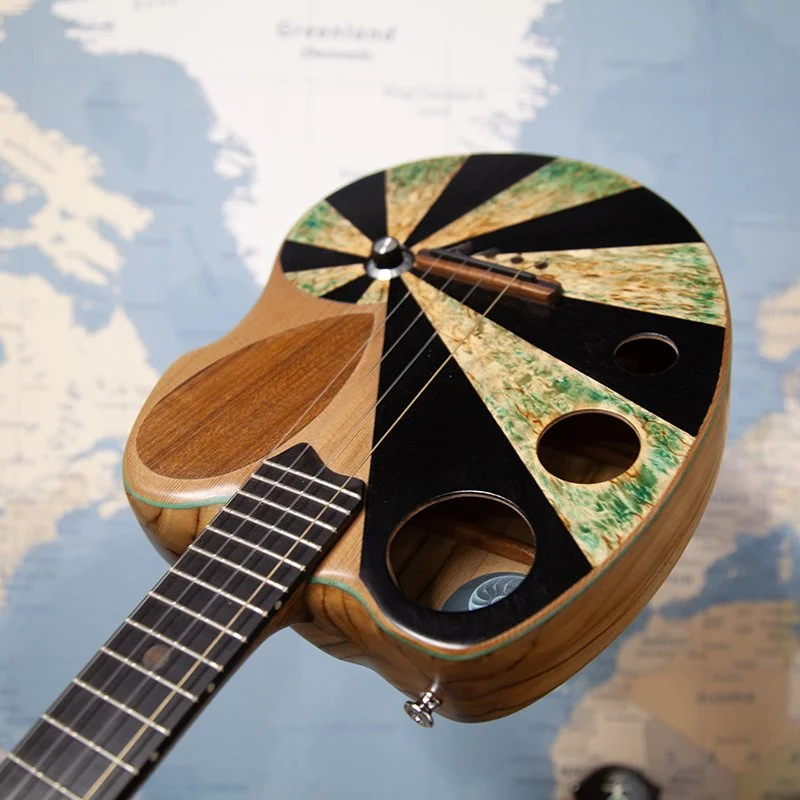
This Ray Vincent uke has a body made from teak, with a top that’s constructed from Western red cedar. That top has a Fibonacci spiral made from birch burl and dyed maple… with the centre of that spiral being the volume knob for the pickup. It has a teak back and neck. The fingerboard is ebony and has a 16” radius.
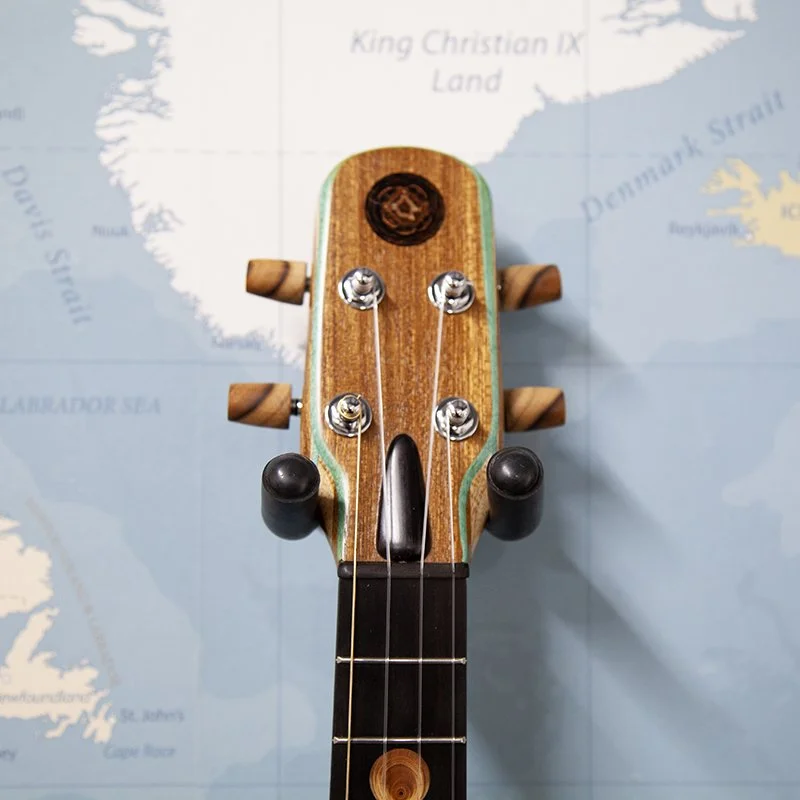
The teak neck which is lovely and smooth, with the same satin finish as the rest of the instrument (Osmo oil apparently… I’ll have to look that one up!). The neck has a carbon fibre reinforcing rod inside. You then have crosscut maple branches used for the fret markers, inlaid into the fingerboard, which is an interesting touch. My favourite though is the pine cone inlay in the headstock which I think is just beautiful - what a clever idea. It also has very precise Gotoh 510 18:1 geared tuners, which have been adapted with teak knobs to match the body.
The inspiration for the design comes from a nautilus shell. I should mention too, the panel on the back, which can be removed to give easy access to the strings when re-stringing (it has a through bridge).
The sound is rich and… woody… It’s an earthy, warm tone, with some nice ring from the fluorocarbon strings as well. There’s plenty of volume and a pleasing depth. It plays nicely too and despite its unusual construction, doesn’t feel cumbersome or unusual to play.
These instruments are certainly different. They’re beautifully made works of musical art. I am aware that some people love them and others think, ‘no, not for me’. Which is fine. The important thing is people like Ray are still innovating. Still pushing the ukulele on towards the future. Without innovation we’d all be still playing Martin sopranos. (Although there’s nothing wrong with that!)
If you click additional information below, you’ll find a video demo from its creator, Ray, taking time out from his workshop (which I imagine to be full of potions and bubbling cauldrons) to provide a demonstration.